
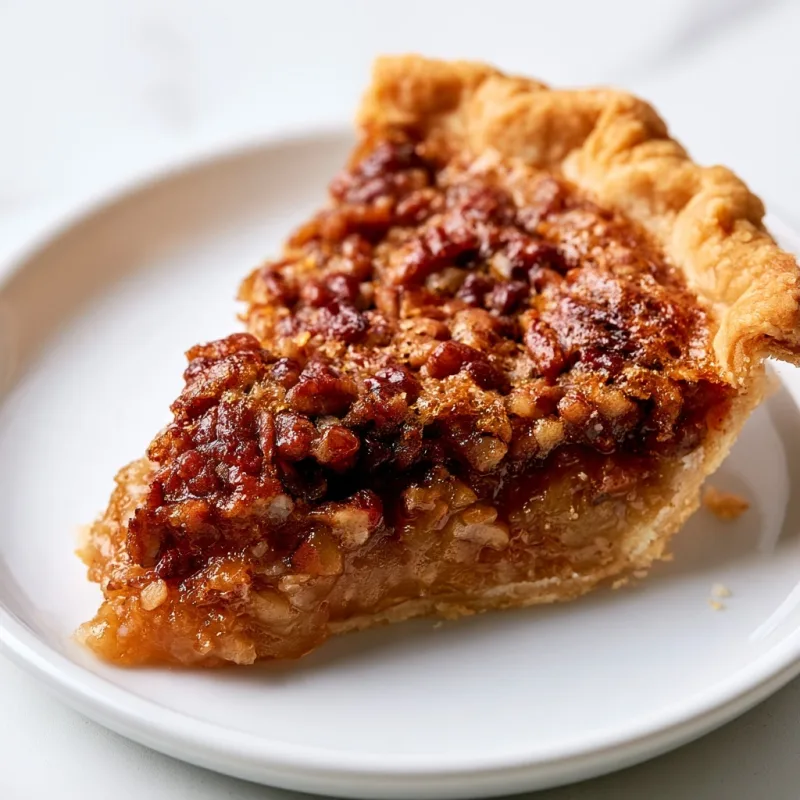
Pecan pie is the dessert that shows up at every Southern table when it matters, Thanksgiving, Christmas, church potlucks, family dinners that stretch into the evening. This version, built on brown sugar instead of the usual white, deepens the filling with molasses notes and a subtle caramel warmth that makes the pecans taste even more like themselves. The problem most home bakers face is a filling that either stays too soft or bakes unevenly, leaving the crust burnt while the center jiggles. This recipe solves that with a two-stage bake and a foil shield that lets you control exactly when the pie sets. You’ll walk away with a pie that slices clean, tastes genuinely complex, and becomes the one people ask you to bring back.
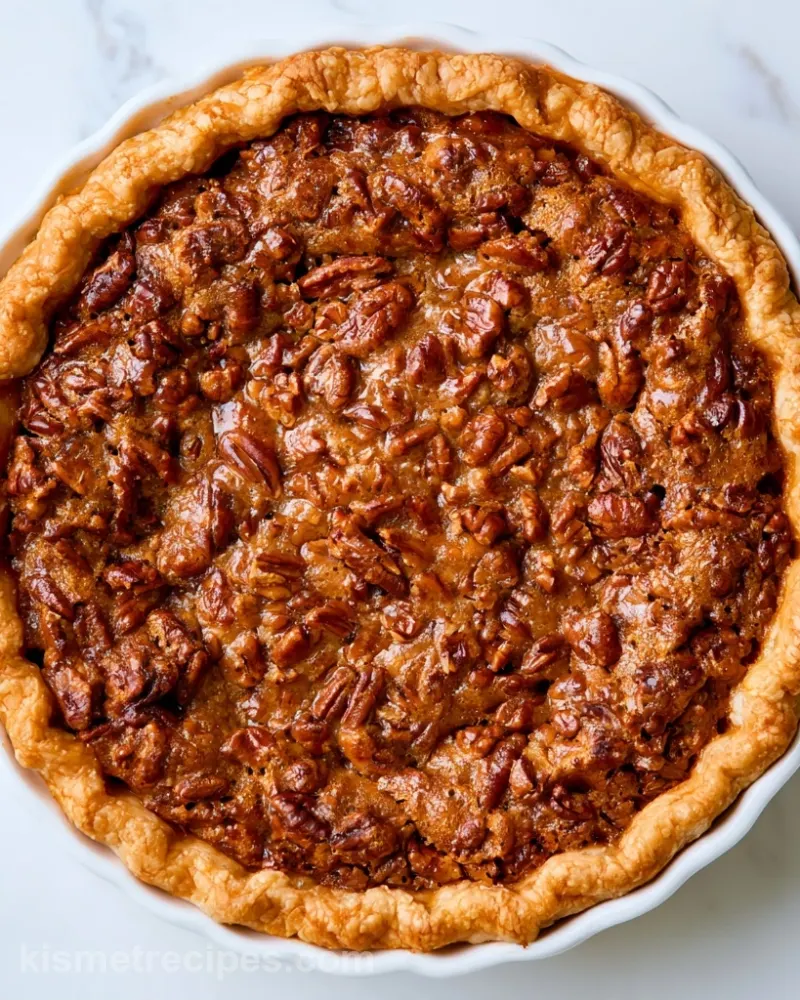
Essential Ingredients & Techniques
- Brown sugar depth: Packed light brown sugar (220 g) replaces white sugar, adding molasses complexity and a caramel undertone that transforms the filling from one-note sweet to layered.
- Pecans stay whole: Chopped pecans (1½ cups) distribute evenly and stay tender throughout baking, giving you texture in every bite instead of a dense nut paste.
- Two-stage bake: Baking uncovered for 30 minutes, then covered for 20, 30 minutes prevents a burnt crust and lets you control the set without guesswork.
- Minimal prep: One bowl, one whisk, five ingredients mixed together, no separate custard, no tempering, no fussy technique.
Essential Ingredients & Techniques
This pie relies on a few core players, each one doing real work.
- Unbaked pie crust: A single bottom crust (store-bought or homemade) gives you a sturdy base. Grease the pan lightly so the crust doesn’t stick, and let it sit at room temperature while you mix the filling, this prevents shrinkage during the first bake.
- Eggs (3, beaten): Eggs set the filling and give it structure. Beating them first ensures they distribute evenly through the corn syrup and sugar, preventing pockets of raw egg or uneven texture.
- Light corn syrup (1 cup / 240 ml): This is the backbone of pecan pie. It keeps the filling glossy and prevents crystallization, which would make the pie grainy. Don’t skip it or substitute honey, the chemistry changes.
- Butter (2 tablespoons / 30 g, melted): Melted butter adds richness and helps the filling set evenly. It also carries flavor into every layer.
- Packed light brown sugar (1 cup / 220 g): The molasses in brown sugar gives this pie its signature warmth. Pack it firmly when measuring so you get the full amount and the full flavor.
- Vanilla extract (1 teaspoon): A small amount rounds out the sweetness and lets the pecan flavor come forward instead of getting buried.
- Chopped pecans (1½ cups / 180 g): Chopped, not halved or whole, so they stay suspended in the filling and give you a pecan in nearly every forkful. Toast them lightly in a dry skillet for 2, 3 minutes before chopping if you want deeper nuttiness.
Step-by-Step Cooking Instructions
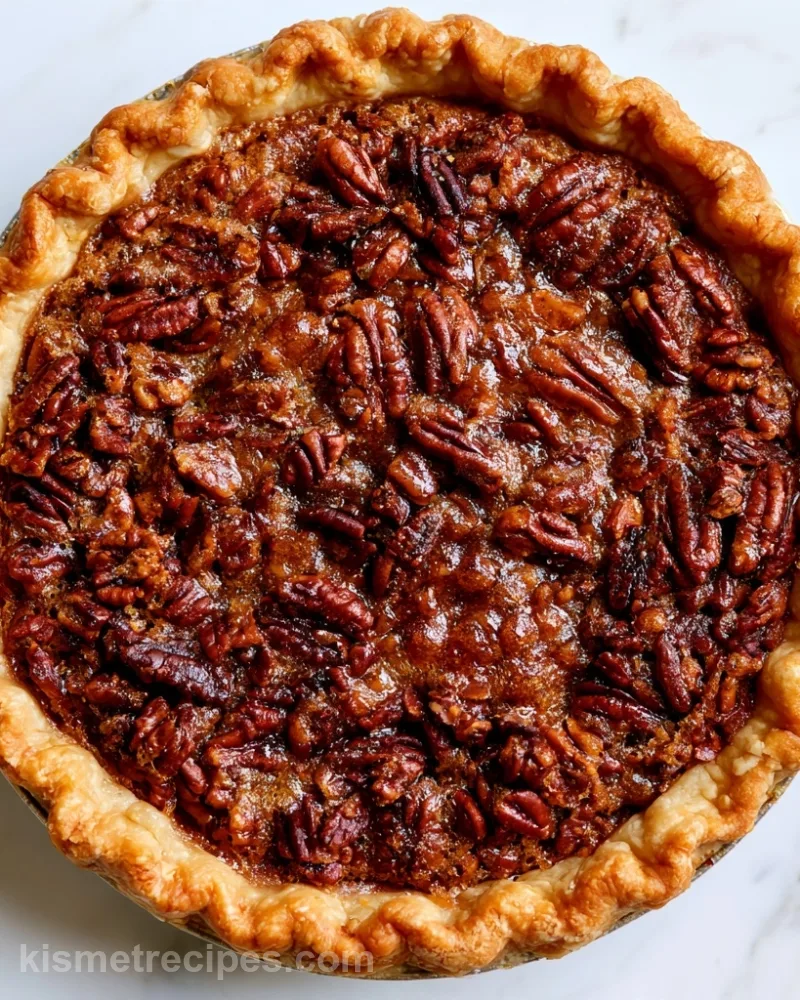
The key to this pie is respecting the two-stage bake, it’s not a shortcut, it’s the method that keeps everything in balance.
Prepare the Crust
- Roll out the unbaked pie crust and lay it into a greased 9-inch pie pan.
- Let it rest at room temperature while you prepare the filling.
Mix the Filling
- In a large bowl, whisk together the 3 beaten eggs, 1 cup (240 ml) light corn syrup, 2 tablespoons (30 g) melted butter, 1 cup (220 g) packed light brown sugar, and 1 teaspoon vanilla extract until smooth and fully combined.
- Stir in the 1½ cups (180 g) chopped pecans until evenly distributed.
- Pour the mixture into the pie shell, spreading the pecans so they settle throughout rather than sinking to the bottom.
First Bake (Uncovered)
- Place the pie in a preheated 350°F (175°C) oven.
- Bake uncovered for 30 minutes, until the outer edges begin to puff and the center still jiggles slightly when you gently shake the pan.
Second Bake (Covered)
- Remove the pie from the oven and carefully lay a sheet of aluminum foil over the top, covering only the crust edges and leaving the center exposed so it can continue to set.
- Return the pie to the oven for another 20, 30 minutes, watching for the outer edge to puff fully and the center to firm up with only a slight wobble in the very middle.
- The foil prevents the crust from darkening too much while the filling finishes cooking.
Cool and Set
Remove the pie from the oven and let it cool completely at room temperature, at least 2, 3 hours. This resting time is essential; the filling continues to set as it cools, and cutting into a warm pie will result in a loose, runny slice.
Common Mistakes & How to Avoid Them
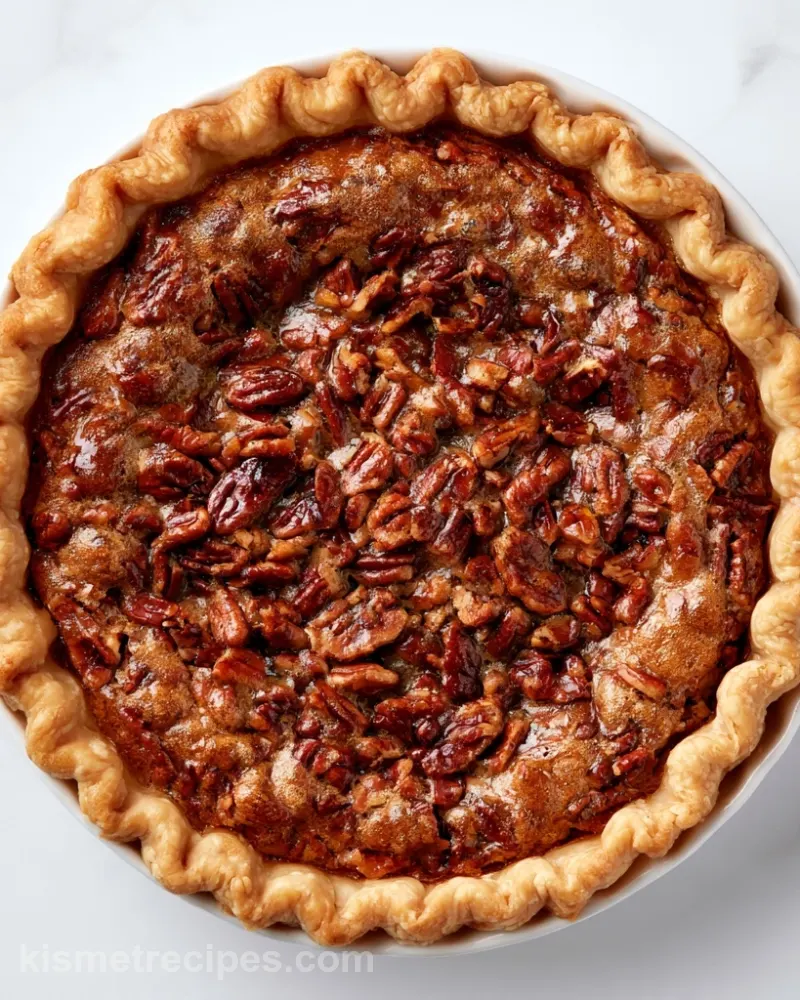
- Burnt crust, soft center: Skip the foil shield and the crust browns too fast while the filling stays loose. Use foil after 30 minutes without fail, and watch the center for a slight jiggle, not a wave.
- Grainy, crystallized filling: This happens when you use regular white sugar instead of brown, or when you don’t use corn syrup. Corn syrup prevents sugar crystals from forming; brown sugar adds molasses that keeps the texture smooth.
- Pecans sink to the bottom: Stir them in after the wet ingredients are combined, and spread them gently as you pour. Don’t let them settle before baking.
- Cutting too early: A warm pie looks set on top but is still soft inside. Cool it completely, overnight is even better, so the filling firms up enough to slice cleanly.
Pro Tips for Authentic Flavors
- Toast the pecans first: Spread chopped pecans in a dry skillet over medium heat for 2, 3 minutes, stirring often, until fragrant. This deepens their flavor and makes them taste less generic and more like the star they should be.
- Use real vanilla extract: Imitation vanilla tastes thin and chemical next to the richness of brown sugar and pecans. Real extract costs a bit more but changes the whole pie.
- Make it a day ahead: Bake the pie the day before serving. It slices cleaner, the flavors meld overnight, and you eliminate last-minute stress. Store it covered at room temperature.
- Add a pinch of sea salt: If you want to amplify the pecan flavor, add ¼ teaspoon fine sea salt to the filling mixture. It won’t taste salty, it will make the sweetness and nuttiness pop.
Serving Suggestions & Pairings
- Whipped cream or vanilla ice cream: A dollop of cold whipped cream or a scoop of vanilla ice cream melts into the warm filling and cuts through the sweetness. Serve pie slightly warm (around 70°F / 21°C) so the contrast works.
- Bourbon or coffee: A small glass of bourbon or a cup of strong black coffee alongside a slice is the classic pairing. The tannins and bitterness balance the pie’s richness.
- Candied pecans on top: For a fancier presentation, scatter a handful of candied pecans on top of each slice just before serving. They add crunch and look intentional.
Frequently Asked Questions
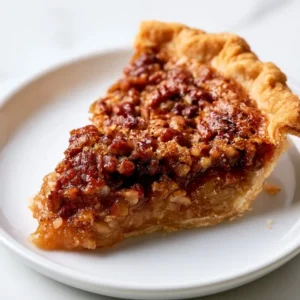
Classic Southern Pecan Pie with Brown Sugar
Ingredients
- 1 unbaked pie crust 9-inch
- 3 large eggs beaten
- 1 cup 240 ml light corn syrup
- 2 tablespoons 30 g unsalted butter, melted
- 1 cup 220 g packed light brown sugar
- 1 teaspoon vanilla extract
- 1½ cups 180 g chopped pecans
Instructions
- Roll out the pie crust and place it in a greased 9-inch pie pan. Let it rest at room temperature.
- In a large bowl, whisk together eggs, corn syrup, melted butter, brown sugar, and vanilla until smooth.
- Stir in the chopped pecans until evenly distributed.
- Pour the filling into the crust and spread the pecans evenly.
- Bake uncovered at 350°F (175°C) for 30 minutes until the edges puff and the center jiggles slightly.
- Remove the pie, cover the crust edges with foil, and return to the oven for 20-30 minutes until the center is firm with only a slight wobble.
- Cool the pie completely at room temperature for at least 2-3 hours before slicing.
Notes
- Toast pecans in a dry skillet for 2-3 minutes before chopping for deeper flavor.
- Use real vanilla extract, not imitation, for the best taste.
- Bake the pie a day ahead; it slices cleaner and flavors meld overnight.
- Add ¼ teaspoon fine sea salt to the filling to amplify sweetness and nuttiness.
Final Thoughts
This Classic Southern Pecan Pie with Brown Sugar is the one you make when you want to feel like you’ve done something real in the kitchen, because you have. The brown sugar gives it character, the two-stage bake gives you control, and the result is a pie that tastes like it came from someone who knows what they’re doing. Bring it to your next holiday table or Sunday dinner and watch it disappear.